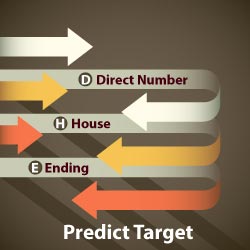
Understanding House and Ending Patterns in Shillong Teer
Published on: | Category: Advanced Strategies
In the domain of traditional number analysis, breaking down a two-digit result into its component parts is one of the most effective ways to spot hidden trends. Experienced trackers of the Shillong teer morning and day sessions focus heavily on what are known as "House" and "Ending" numbers rather than just guessing random double-digit combinations.
What are House and Ending Numbers?
Every standard outcome consists of a tens digit and a units digit. Understanding how these positions behave independently is key to mastering long-term tracking:
- The House Digit: This represents the tens position of the outcome. For example, if the calculated target is 43, the "House" is flagged as 4 (meaning any number in the 40s range).
- The Ending Digit: This represents the units position. In the same number 43, the "Ending" is 3 (meaning any number ending with 3, such as 03, 13, 23, etc.).
How Analysts Isolate High-Probability Blocks
Instead of trying to predict the exact direct shillong teer number out of a hundred possibilities, smart analysts try to isolate a single active House or Ending block for the day. If a date-matrix calculation indicates that the number 7 is highly active in the unit position, the analyst will back an "Ending 7" strategy, covering combinations like 17, 27, 37, and 47.
This systematic method reduces risk and provides a structured framework for evaluating daily updates, allowing enthusiasts to make data-driven decisions based on historical chart histories.